

Thermal stress is one of the quiet killers of precision in laser cutting. You design a perfect part, run it on an accurate machine, and the piece comes off the table warped, bowed, or out of tolerance. The cause is heat: the laser melts a narrow line, the metal around it heats and cools unevenly, and that uneven movement leaves stress locked into the part. The good news is that it is manageable once you understand it. This guide explains what it is and the proven ways to reduce the distortion it causes.
Table of Contents
- What Is Thermal Stress in Laser Cutting?
- Why It Causes Part Distortion
- Signs to Watch For
- How to Reduce Thermal Stress
- Material and Thickness Factors
- Frequently Asked Questions
Key Takeaways
- Thermal stress comes from uneven heating and cooling around the cut.
- It shows up as warping, bowing, and parts that drift out of tolerance.
- Cut sequencing, lead-ins, and smart nesting cut distortion the most.
- Thin sheet and high-heat materials distort the most.
What Is Thermal Stress in Laser Cutting?
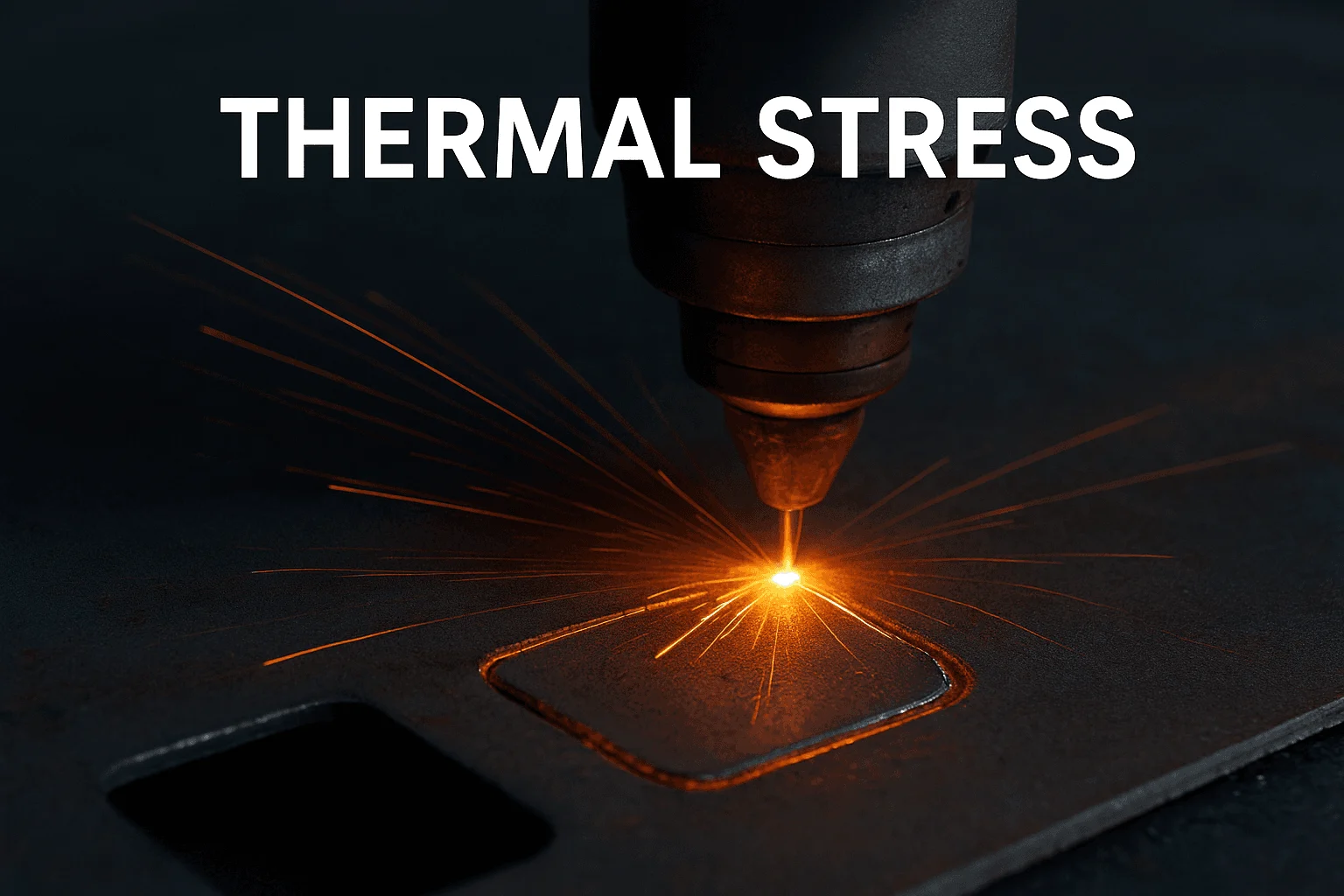
Thermal stress is the internal tension left in metal when different areas heat and cool at different rates. A laser puts intense, localized heat into a thin line. The metal right at the cut expands, the cooler metal nearby resists that expansion, and as everything cools back down the part is left with built-in stress. When that stress is greater than the part can hold flat, it moves, and the result is distortion you can see and measure.
Why It Causes Part Distortion
Distortion happens because metal that is heated unevenly does not return to its original shape evenly. Thin sheet has little mass to absorb and spread the heat, so it bends and bows the most. Tight clusters of cuts concentrate heat in one area, and long unbroken cuts let stress build along their length. Even the leftover skeleton of the sheet can pull on parts as it cools. Understanding where the heat goes is the first step to keeping parts flat.
Signs to Watch For
The clearest signs are parts that will not lie flat, edges that lift, and dimensions that drift as a job runs. You may see small parts pop or tip out of the nest, or features that measure fine at the start of a sheet and off by the end. Discoloration and a wider heat-affected zone often go along with it. If parts are leaving the table warped despite good cut quality, this is usually the reason.
How to Reduce Thermal Stress
Reducing it is mostly about managing heat. Sequence cuts so heat is spread across the sheet instead of stacked in one spot, and let an area cool before cutting next to it. Use smart nesting and common-line cutting where it fits, keep small features and tight detail for later in the sequence, and choose lead-ins that release stress cleanly. Dialing speed and power to put in only the heat you need also helps. Our laser cut edge quality guide covers the parameter side, and the cutting speed guide ties speed to heat input.
Material and Thickness Factors
Some materials fight you more than others. Thin sheet distorts easily because it cannot absorb heat, and metals that hold heat or move a lot as they cool need extra care. Thicker plate resists it better but takes more energy to cut, which feeds heat back in. The fix is to match your sequencing and parameters to the material in front of you rather than running one recipe for everything. For the engineering background, the TWI knowledge base is a solid reference.
Frequently Asked Questions
What causes thermal stress in laser cutting?
It is caused by uneven heating and cooling around the cut. The metal at the cut expands while cooler metal nearby resists it, leaving internal stress that can warp the part as it cools.
How do I stop laser cut parts from warping?
Spread heat across the sheet with smart cut sequencing, let areas cool before cutting next to them, use good nesting and lead-ins, and tune speed and power to add only the heat you need.
Which materials are most prone to thermal stress?
Thin sheet is the most prone because it cannot absorb heat, and metals that hold heat or move a lot as they cool also distort easily. Thicker plate resists it better but takes more energy to cut.
Fighting distortion on your machine?
Reger Laser services Tanaka fiber lasers and helps shops dial in sequencing and parameters for flat, accurate parts. Get in touch for service or training.

