
Laser optics maintenance is one of the cheapest ways to protect cut quality and uptime, and one of the most overlooked. The lens, cover glass, and nozzle on your fiber laser sit right in the path of heat, smoke, and spatter, and they degrade a little every cut. Stay ahead of that wear and the machine keeps cutting clean. Fall behind and you get rough edges, lost power, and eventually a damaged component. This guide covers laser optics maintenance: what to watch, when to clean, and when to replace.
Table of Contents
- Why Laser Optics Maintenance Matters
- The Optics That Need Attention
- When to Clean the Optics
- When to Replace the Optics
- Building a Laser Optics Maintenance Routine
- Frequently Asked Questions
Key Takeaways
- The cover glass, focus lens, and nozzle wear fastest and need the most attention.
- Clean optics on a set schedule; do not wait for cut quality to drop.
- Replace optics that are scratched, pitted, or burned, not just dirty.
- A clean cover glass often restores power that looked like a source problem.
Why Laser Optics Maintenance Matters
The optics focus and deliver the beam, so anything on their surface scatters energy before it reaches the metal. A film of smoke or a few specks of spatter can cut effective power, round the focus, and leave rough edges, all while the source itself is perfectly healthy. Worse, a dirty surface absorbs heat and can burn, turning a quick cleaning job into a part replacement. Good laser optics maintenance keeps power on the work and stops small problems from becoming expensive ones.
The Optics That Need Attention
On a fiber laser, the protective cover glass takes the worst of the smoke and spatter and is the most frequent thing you clean or swap. The focus lens shapes the beam and needs careful, clean handling. The nozzle, while not an optic, sits in the same zone and shapes the assist gas, so it belongs in the same routine. Knowing which part is which makes troubleshooting faster: most cut-quality drops trace back to the cover glass first.
When to Clean the Optics
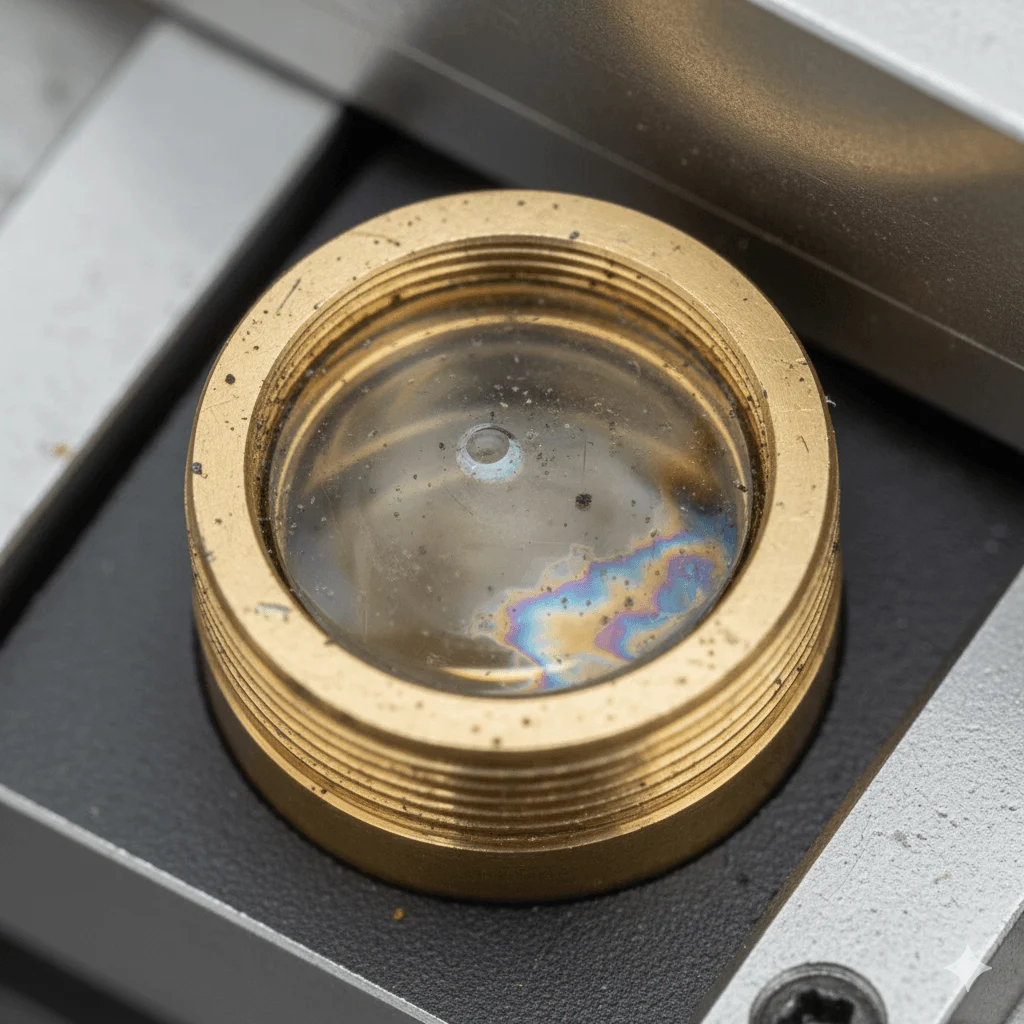
Clean on a schedule, not a hunch. Inspect the cover glass at least daily on a busy machine and clean it whenever you see film, specks, or the first hint of rougher edges. Use the right lens wipes and solvent, handle by the edges, and never drag grit across the surface. The goal is to clean before contamination bakes on, because once it burns into the coating, cleaning will not save it.
When to Replace the Optics
Cleaning fixes dirt; it does not fix damage. Replace an optic when you see scratches, pitting, cloudiness that will not wipe away, or any burn mark or coating damage. Those defects scatter the beam permanently and only get worse. Trying to nurse a damaged lens along risks the more expensive parts behind it. Keep spare cover glass and a focus lens on the shelf so a worn optic never means waiting on a shipment with the machine down.
Building a Laser Optics Maintenance Routine
The best laser optics maintenance is a simple routine your operators actually follow: a daily cover-glass check, a clean when it is dirty, and a logged inspection of the lens and nozzle on a set interval. Tie it into the rest of your machine upkeep so nothing slips. Our fiber laser preventative maintenance guide puts optics in the context of the full schedule, and for handling best practices the TWI knowledge base is a good reference.
Frequently Asked Questions
How often should I clean my laser optics?
Inspect the cover glass daily on a busy machine and clean it whenever you see film or specks, or when edge quality starts to slip. Cleaning before contamination bakes on is the key to long optic life.
When should laser optics be replaced instead of cleaned?
Replace any optic that is scratched, pitted, cloudy after cleaning, or shows a burn or coating damage. Those defects scatter the beam for good and put the parts behind them at risk.
Can dirty optics cause power loss?
Yes. A dirty cover glass or lens scatters and absorbs beam energy, so the metal sees less power even when the source is healthy. A cleaning often restores what looked like a source problem.
Need optics or service support?
Reger Laser stocks consumables and services Tanaka fiber lasers, so you can keep spares on the shelf and the machine cutting. Get in touch for parts or service.


