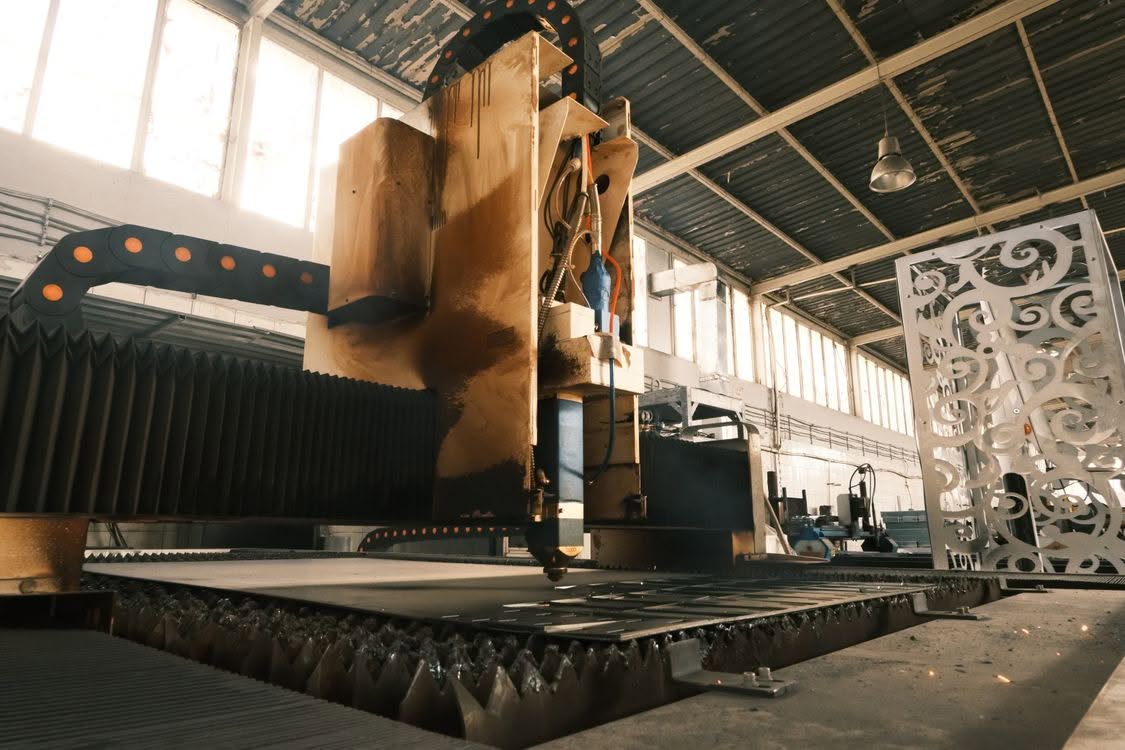
Tanaka laser cutting machines run the cutting floor in shops that need clean edges, low operating costs, and uptime they can plan around. Tanaka has built fiber laser systems for more than 30 years, and Reger Laser has sold, installed, and serviced them for more than 20. This guide pulls everything into one place: how the machines work, what separates fiber from older CO2 and plasma systems, the current lineup, the metals they cut, what it takes to keep one running, and how to choose between new and used. If you are weighing your first laser or replacing an aging machine, start here instead of stitching together a dozen half-answers.

Table of Contents
- How Tanaka Laser Cutting Machines Work
- Fiber vs CO2: Why Tanaka Builds Around Fiber
- 7 Reasons Shops Rely on Tanaka Laser Cutting Machines
- The Tanaka Machine Lineup
- Materials and Applications
- Service, Parts, and Chillers
- New or Used: How to Choose
- Related Tanaka and Fiber Laser Guides
- Frequently Asked Questions
How Tanaka Laser Cutting Machines Work
A fiber laser cuts by focusing a high-power beam onto metal until it melts or vaporizes, while an assist gas blows the molten material out of the kerf. The beam starts in a fiber source, travels through a beam delivery system, and is brought to a fine point at the cutting head. A control system coordinates the beam power, the focus height, the assist gas, and the feed rate so the cut repeats the same way on the first part and the ten-thousandth. The result is a narrow kerf, tight tolerances, and edges that often need no secondary finishing. Because the focus is tuned to the material, laser cutting holds accuracy on both reflective and non-reflective metals, which is where older processes start to struggle.
Four subsystems do the work, and understanding them makes service and buying decisions easier:
- Laser source: the heart of the machine. Tanaka uses fiber sources for their efficiency, long service life, and clean beam quality.
- Beam delivery: carries the beam to the head through a sealed fiber path with very little power loss, unlike the mirror trains older CO2 machines rely on.
- Cutting head: holds the focusing lens, nozzle, and height sensor that keep the focal point exactly where it belongs above the sheet.
- Control system: manages speed, focus, gas pressure, and pierce timing, and stores the settings for each material and thickness so operators are not guessing.
Most modern machines also automate the slow parts of the day. Sheet loading, nesting to reduce scrap, and pierce sequencing all happen with little operator input, which is part of why one laser can replace several older cutting stations.
Fiber vs CO2: Why Tanaka Builds Around Fiber
Older CO2 lasers and plasma tables still cut metal, but they carry recurring costs that fiber removes. A fiber laser generates the beam inside a solid fiber rather than a sealed tube of gas, so there is no laser gas to buy, no resonator mirrors to align, and far less energy lost as heat. In practice, Tanaka fiber lasers draw roughly 50 to 70 percent less power than a comparable CO2 machine producing the same cut. That difference shows up on the power bill every month and in the cost of every part that crosses the table.
Fiber also wins on speed where most shops live. On thin and medium-gauge sheet, a fiber beam moves significantly faster than CO2 or plasma, so cycle times drop and a shift produces more parts from the same footprint. The beam quality is tight enough to cut intricate detail and reflective metals like aluminum, brass, and copper, which CO2 handles poorly. CO2 still earns its place on certain thick plate and non-metal work, so the honest answer is that fiber is the right tool for the bulk of production metal cutting, not every job ever. That is the bet Tanaka builds around, and it is why fiber has taken over so much of the market.
7 Reasons Shops Rely on Tanaka Laser Cutting Machines
Across the shops Reger Laser works with, the same advantages come up again and again. Here is what keeps these machines on the floor.
1. Lower operating costs
No laser gas, fewer consumables, and lower power draw drive the cost per part down. Over a year of one or two-shift production, the gap against a CO2 system is large enough to change a quote and a margin.
2. Real energy efficiency
Fiber sources turn more of the electricity they draw into actual cutting power. Less waste heat also means a lighter load on the chiller and the shop HVAC, which compounds the savings rather than adding a hidden cost somewhere else.
3. Fewer consumables to stock
There are no laser gases and no resonator mirrors on a replacement schedule. Nozzles, lenses, and protective windows are the main wear items, so the parts shelf stays small and predictable, and you are not chasing exotic supplies.
4. Less maintenance and downtime
A fiber source has no moving optics to drift out of alignment, so routine maintenance is lighter and unplanned stops are rarer. On a production floor, planned uptime is the whole game, and fiber gives you more of it.
5. Faster feed rates
On thin and medium sheet, fiber beats CO2 and plasma on speed, often by a wide margin. Faster cycles mean more parts per shift and shorter lead times you can actually promise a customer.
6. Clean edge quality
A narrow kerf and steady focus produce smooth, square edges with minimal dross. Many parts come off the table ready for the next operation with no grinding or deburring, which removes a whole step and the labor that goes with it.
7. A wide material range
From thin stainless to thicker carbon steel and reflective metals like aluminum, brass, and copper, one machine covers the range most shops need. That flexibility is what lets a single laser absorb work that used to require several processes.

The Tanaka Machine Lineup
Tanaka builds several series so you can match the machine to your work instead of overpaying for capacity you will not use. Reger Laser carries and supports the full range:
- Tanaka Sonic series: a strong entry into fiber for shops moving off CO2 or plasma without overbuying.
- FMRIII series: a workhorse built for everyday production cutting across mixed jobs.
- New FMZIII series: more output for shops pushing higher volume and thicker material.
- LMRV TF4000 and LMRV TF6000: higher-power platforms for demanding cut lists and longer runs.
- FMRII series: a proven platform that many shops still run hard every day.
The right choice comes down to your sheet sizes, your material mix, and how many hours the machine will run each week. A shop cutting thin stainless all day has different needs than one cutting thick carbon plate in batches. Not sure where you land? Browse the new machine lineup or request a quote and Reger Laser will size it with you rather than steer you to the biggest invoice.
Materials and Applications
These machines handle the metals that move through most fabrication shops, and the precision opens up work that saws and plasma cannot touch:
- Carbon steel for structural work, brackets, and heavy fabrication.
- Stainless steel for food, medical, architectural, and sanitary parts where edge quality is non-negotiable.
- Aluminum, brass, and copper, including reflective grades that older lasers struggle to cut cleanly.
- Intricate parts such as gussets, enclosures, gaskets, and custom profiles where tight tolerances and repeatability matter.
Because the focal point is adjustable, the same machine moves from thin detailed work to thicker plate without a tooling change. That single capability is why a laser so often replaces a saw, a punch, and a plasma table at once. In electronics and precision work, the same beam control supports fine cutting and etching where heat distortion would ruin the part. The thread running through every application is the same: clean cuts, fewer secondary steps, and parts that come out the same every time.
Service, Parts, and Chillers
A laser is only as good as its uptime, and uptime is where a local partner earns its keep. Reger Laser backs every machine with maintenance, repair, and preventative service so small issues get caught before they stop the line. A simple preventative schedule, checking optics, nozzles, and gas delivery on a regular interval, prevents most of the failures that catch shops by surprise.
We also source genuine parts so a worn nozzle or lens does not turn into a week of waiting, and we train operators so your team runs the machine with confidence instead of fear. Cutting power depends on stable temperature, so we pair machines with Orion industrial water chillers that hold the laser source in its ideal range. A source that runs too hot loses power and accuracy and ages faster, so the chiller is not an accessory, it is part of protecting the investment. The goal across all of it is shorter downtime and a lower total cost of ownership, not just a sale and a handshake.
New or Used: How to Choose
A new machine gives you the latest control software, full warranty, and the longest service life ahead of it, which makes sense for shops cutting daily or planning to grow. A used Tanaka machine can be the smart entry for a shop adding capacity or proving out a new line without the full new-machine outlay.
If you go used, inspect the source hours, the condition of the optics and cutting head, and the service history before you commit, the same way you would with any production asset. The deciding factors are always the same three: your sheet sizes, your material mix, and how many hours the machine will run. Talk it through with Reger Laser and we will point you to the honest fit, new or used, instead of the biggest line item.
Frequently Asked Questions
How much does a Tanaka laser cutting machine cost to run?
Running costs are low because fiber lasers use no laser gas, draw roughly 50 to 70 percent less power than CO2, and wear through few consumables. The real savings show up as a lower cost per part over a full production year. See the current machine lineup to match a model to your volume.
Is a fiber laser better than a CO2 laser for metal?
For production metal cutting, yes. Fiber cuts thin and medium sheet faster, costs less to run, needs less maintenance, and handles reflective metals CO2 cannot, while CO2 keeps a niche on certain thick or non-metal jobs. The FMRIII series is a common upgrade path off an aging CO2 machine.
What materials can these machines cut?
They cut carbon steel, stainless steel, aluminum, brass, and copper, including reflective grades, across a wide thickness range. The adjustable focus moves from detailed thin work to thicker plate without retooling. The materials section above lists the common grades and uses.
How do you keep a laser cutter from going down?
Planned uptime comes from preventative service, genuine parts on hand, and stable cooling. Reger Laser provides scheduled maintenance and repair and pairs machines with Orion chillers to hold the source temperature steady and prevent heat-related faults before they start.
Should I buy a new or used Tanaka machine?
Buy new if you cut daily or plan to grow and want full warranty and the latest controls. Consider a used Tanaka machine to add capacity at a lower entry cost, after checking source hours and service history. Request a quote and we will size the right option with you.
Talk to Reger Laser about the right Tanaka machine
Reger Laser sells, installs, services, and supports Tanaka fiber lasers for fabrication shops across the country. Contact our team or request a quote and we will help you cut cleaner, faster, and for less.
Related Tanaka and Fiber Laser Guides
These guides go deeper on the materials, settings, and upkeep behind the machines above. Each one is written for the shop floor, not the brochure.
- Cutting stainless steel with a fiber laser. Nitrogen settings, oxide-free edges, and where stainless punishes a sloppy setup.
- Fiber laser cutting of aluminum. Why aluminum reflects, how to keep dross down, and which assist gas to run.
- Cutting copper and brass with a fiber laser. Back-reflection protection and the parameters reflective metals actually need.
- Fiber laser cutting parameters by material and thickness. A starting-point table for power, speed, gas, and standoff on common metals.
- Fiber laser cutting thickness limits. What a machine can really cut versus what the spec sheet claims.
- Fiber laser vs plasma cutting. Edge quality, thickness range, and running cost compared side by side.
- Laser cutting nesting and material waste. Nesting choices that pull more parts out of every sheet.
- Fiber laser beam alignment and calibration. The alignment checks that keep cut quality consistent shift after shift.
- How long a fiber laser source lasts. Realistic source hours, what shortens them, and how to plan for replacement.
- How to size a chiller for your fiber laser. Matching chiller capacity to source wattage so cutting temperatures hold steady.