
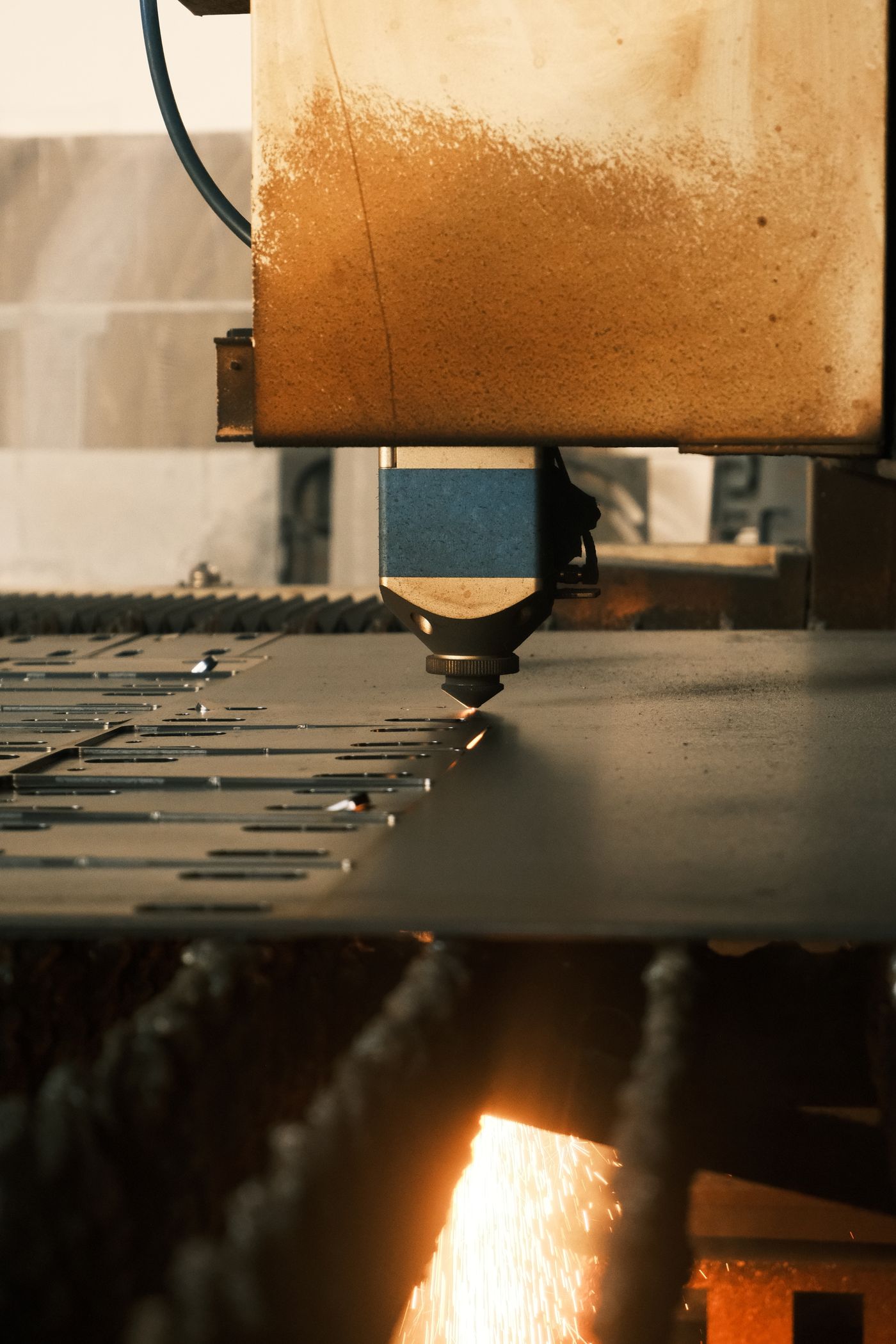
The benefits of laser cutting come down to one thing: a clean, accurate part with less effort than older methods. A fiber laser turns a drawing into a finished piece of metal with tight tolerances, smooth edges, and very little waste. For shops bringing designs to life day after day, that means fewer rejects, faster turnaround, and parts that fit the first time. Here are the real benefits of laser cutting and why it has become the standard for metal fabrication.
Table of Contents
- Precision and Repeatability
- Versatility Across Materials
- Speed and Less Waste
- Clean Edges, Less Finishing
- The Benefits of Laser Cutting for Everyday Production
- Frequently Asked Questions
Key Takeaways
- A fiber laser holds tight tolerances and repeats the same part thousands of times.
- One machine cuts a wide range of metals and thicknesses with a setting change, not a tooling change.
- Narrow cuts and tight nesting mean less wasted material on every sheet.
- Clean edges cut down on grinding and secondary finishing.
Precision and Repeatability
The first of the benefits of laser cutting is precision. A focused fiber laser beam is far narrower than a saw blade or punch, so it follows fine detail and holds tight tolerances across the whole sheet. Just as important is repeatability: the hundredth part matches the first because the machine runs from the same digital file every time. For shops making production runs, that consistency removes the guesswork and the hand-fitting that slow a job down.
Versatility Across Materials
A fiber laser handles mild steel, stainless, aluminum, brass, and copper, and it switches between them with a change of settings rather than a change of tooling. Thin sheet and thicker plate both run on the same machine. That flexibility is a quiet advantage: one laser covers work that used to need a saw, a punch, and a router, which frees up floor space and shortens the path from design to finished part.

Speed and Less Waste
Speed is one of the most visible benefits of laser cutting. A fiber laser cuts thin and mid-gauge sheet quickly, and it moves from one part to the next without stopping to swap tools. Smart nesting software packs parts tightly onto the sheet, so the narrow cut width and tight layout leave less drop and scrap behind. Faster cuts and better material use both feed the same result: more finished parts from the same sheet and the same shift.
Clean Edges, Less Finishing
A well-tuned laser leaves a smooth, square edge with little dross or burr. That matters downstream: parts that come off the table clean need less grinding, deburring, and rework before they move to welding, bending, or paint. The right assist gas and focus settings keep edges sharp across materials. Cleaner edges are not just about looks. They save labor at every step that follows the cut.
The Benefits of Laser Cutting for Everyday Production
Add it up and the benefits of laser cutting show in the numbers that matter to a shop: less scrap, less rework, faster turnaround, and parts that fit. A reliable machine keeps that going day after day, which is why setup and upkeep matter as much as the laser itself. Our fiber laser preventative maintenance guide covers the routine that protects cut quality, and the Tanaka fiber laser lineup shows the machines built for this kind of production. For a deeper look at how the beam itself does the work, the TWI knowledge base is a solid reference.
Frequently Asked Questions
What are the main benefits of laser cutting?
The main benefits of laser cutting are precision, repeatability, material versatility, speed, less wasted material, and clean edges that need little finishing. Together they cut down on scrap and rework while speeding up turnaround.
What materials can a fiber laser cut?
Fiber lasers cut mild steel, stainless, aluminum, brass, and copper across a range of thicknesses, switching between them with a settings change. See the Tanaka lineup for material and thickness ranges.
Is laser cutting better than plasma or waterjet?
For thin to mid-gauge metal, a fiber laser usually wins on precision, edge quality, and speed. Plasma and waterjet still have a place for very thick plate or heat-sensitive work, so the best choice depends on your material mix.
Want to put these benefits to work?
Reger Laser sells, installs, and services Tanaka fiber lasers built for clean, repeatable cuts. Get in touch to find the right machine for your shop.


