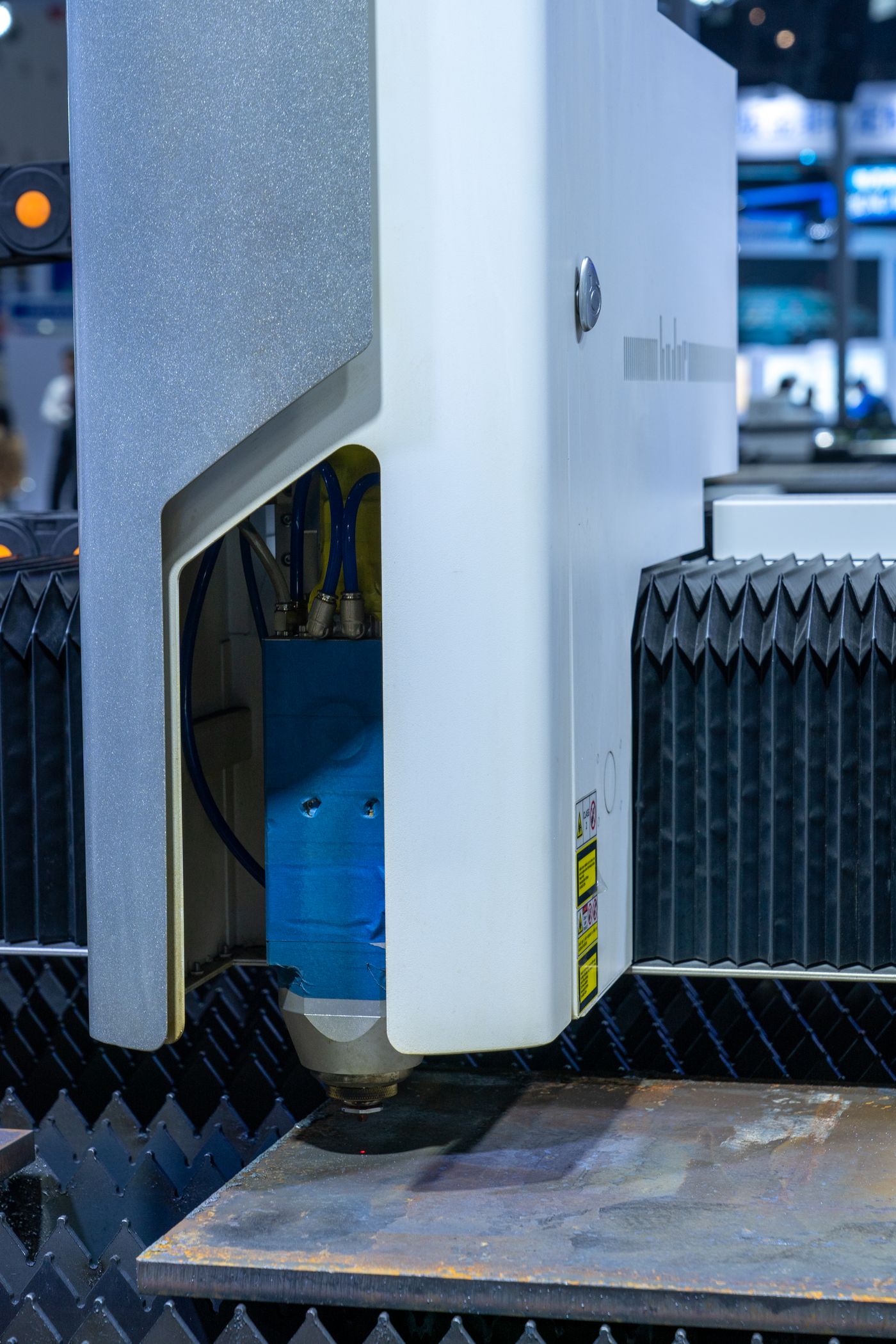

Fiber laser preventative maintenance is the routine of daily, weekly, and monthly checks that keep a cutting machine producing clean parts and keep the source out of an unplanned shutdown. Skip it and the machine still runs, right up until cut quality drifts, a protective window cooks, or a chiller fault drops the source mid-job. A short, repeatable fiber laser preventative maintenance plan costs a few minutes a shift and saves the days of lost production that come with a surprise repair. This guide lays out exactly what to do, how often, and why each task earns its place.
Table of Contents
- Why Fiber Laser Preventative Maintenance Pays for Itself
- The Maintenance-Free Myth
- Daily Fiber Laser Preventative Maintenance Tasks
- Weekly and Monthly Tasks
- Do Not Neglect the Cooling Loop
- Tune the Routine to How Hard You Run
- Five Mistakes That Quietly Wreck Optics
- What a Good Maintenance Log Captures
- Build a Plan You Will Actually Follow
- Frequently Asked Questions
Key Takeaways
- Fiber laser preventative maintenance is mostly optics and cooling, not the source itself.
- Daily tasks take under ten minutes: clear slag, check the protective window, watch the chiller.
- The myth that fiber lasers are maintenance-free is what fills repair calendars.
- A written schedule, signed off each shift, is the difference between a plan and a hope.
- A maintenance log tells you how fast you burn consumables, which is how you stock parts right.
Why Fiber Laser Preventative Maintenance Pays for Itself
A fiber laser does not warn you politely. Cut edges get a little rougher, the machine needs a second pass, then one morning the source faults on an over-temperature alarm and the floor goes quiet. Every one of those steps traces back to a maintenance task that was due and got skipped. That is the case for fiber laser preventative maintenance in one sentence: the machine fails on its schedule unless you work on yours.
The economics are not complicated. A protective window costs little. A focus lens costs more. A day of a stalled machine, with operators standing and jobs slipping past their promise dates, costs far more than either. Fiber laser preventative maintenance moves the spend from emergencies you cannot schedule to small parts you can, and that trade is almost always in your favor.
Trade resources like The Fabricator have documented for years that cut-quality problems are usually maintenance problems wearing a costume. The fix is rarely exotic. It is a clean optic, a centered nozzle, or a chiller that is actually rejecting heat. A consistent fiber laser preventative maintenance routine is how you keep those small problems from ever reaching the part.
There is a reputation cost too, not just a repair cost. A machine that drops a job because of a skipped check makes you miss a promise date, and missed dates are how shops lose repeat customers. Fiber laser preventative maintenance protects the schedule you sell against, which is worth far more than the price of the parts it saves.

The Maintenance-Free Myth
Here is the trap that catches shops new to fiber. The machines have no resonator gas to refill and no mirrors to align the way a CO2 laser does, so people assume they are nearly maintenance-free. That belief is half true and fully expensive.
The beam still travels through a protective window and a focus lens, still exits through a nozzle, and still depends on a chiller to hold the source at temperature. Those are the wear items, and they need the same daily discipline a CO2 machine always demanded. Losing the gas optics did not remove the work, it just moved it to the cutting head and the cooling loop. Treat fiber laser preventative maintenance as optics and cooling care and you will be working on the right things.
The shops that struggle most are the ones that ran a fiber for a year with no routine and got away with it, because the machine is forgiving until it is not. The day it stops forgiving is the day the repair bill arrives. A modest routine keeps that day off the calendar entirely.
Daily Fiber Laser Preventative Maintenance Tasks
Daily work is short, and it is the part of fiber laser preventative maintenance that prevents the most damage. Build it into the first ten minutes of the shift so it never gets skipped under deadline pressure.
- Clear slag and offcuts from the slat bed and the area under the cutting head.
- Inspect the protective window for spatter, haze, or a burn mark and replace it if it is anything but clear.
- Wipe the nozzle tip and confirm it is round, centered, and undamaged.
- Check the chiller water level and the supply temperature before the first cut.
- Drain the air filter and water separator on the assist-gas line.
- Listen and look on the first cut: a change in the sound or the spark pattern is an early warning.
None of this is glamorous, and all of it is cheaper than the alternative. A clouded protective window left in place absorbs energy, heats up, and can take the focus lens with it, which turns a two-minute daily task into a real repair. The daily list is the highest return part of any fiber laser preventative maintenance plan precisely because it catches the cheap problems before they become expensive ones.
Make the daily check a habit, not a decision. When it is a fixed part of starting the machine, like putting on safety glasses, it happens every time. When it is optional, it happens until the first busy morning and then never again.
Weekly and Monthly Tasks
Weekly and monthly work is where fiber laser preventative maintenance keeps the motion system and the cooling loop honest. It takes longer than the daily list, so it earns a calendar slot with a name attached rather than a shift slot.
Weekly
- Clean the optical path and inspect the focus lens, following the head maker’s procedure.
- Lubricate rails, racks, and lead screws so motion stays smooth and positioning stays accurate.
- Blow out and inspect the cutting head for dust and spatter buildup.
- Check assist-gas pressure and flow against the settings your good cuts were dialed in at.
- Inspect cables and the drag chain for wear, pinch points, or coolant leaks.
Monthly
- Replace or clean air-assist and extraction filters.
- Inspect cooling lines and fittings for leaks, kinks, or scale.
- Verify chiller coolant condition and conductivity, and plan the coolant change on its cycle.
- Back up the machine parameters and cut tables so a control fault never erases your settings.
- Check and re-level the slat bed, and replace slats that have melted into peaks.
Optics are the heart of the weekly routine. If you want the deeper version of when a lens has earned replacement rather than another cleaning, our guide on when to replace laser optics walks through the signs to watch. The protective window is sacrificial on purpose, so treat it as a consumable, not a repair, and never try to nurse a damaged one through another shift.
Do Not Neglect the Cooling Loop
A fiber laser preventative maintenance plan that ignores the chiller is half a plan. The source lives inside a narrow temperature band, and the chiller is what holds it there. A fouled condenser, low coolant, or drifting water quality shows up as over-temperature faults long before anyone thinks to blame the cooling system.
Keep the condenser fins clean, use the coolant the maker specifies rather than tap water, and watch conductivity over time. Rising conductivity is an early sign that the water is picking up impurities and the loop needs attention. We cover the full routine in our laser chiller maintenance guide, and if you run an Orion unit, the Orion industrial water chillers page covers the model specifics.
Cooling problems are sneaky because the symptom appears at the source, not at the chiller. An operator sees a power-related fault and starts chasing the laser when the real culprit is a coil packed with shop dust. Folding the cooling loop into your fiber laser preventative maintenance routine is what keeps you from troubleshooting the wrong end of the machine.

Tune the Routine to How Hard You Run
A published schedule is a starting point, not a law. The right fiber laser preventative maintenance interval depends on how hard and how dirty your shop runs the machine. A single-shift job shop cutting clean material is not the same as a three-shift operation cutting oily plate, and their routines should not be identical.
Watch the things that wear fastest and let them set your pace. If you cut a lot of thick mild steel with oxygen, expect more spatter and more frequent protective-window changes. If your shop air is full of grinding dust, the chiller condenser and the cabinet filters load up faster and need attention sooner. Heavy nitrogen cutting at high pressure burns through gas and stresses the head. Let your own consumption and your own faults pull tasks earlier in the calendar when the machine is telling you to.
This is why the maintenance log matters so much. It turns a generic interval into a schedule tuned to your reality, so your fiber laser preventative maintenance is neither wasteful nor late. The goal is to do each task just before it would have caused a problem, and only your own data can find that timing.
Five Mistakes That Quietly Wreck Optics
Most optic damage is not bad luck, it is a small habit repeated until it costs real money. A good fiber laser preventative maintenance routine is partly about doing the right tasks and partly about not doing these five things.
- Touching the focus lens or protective window with bare fingers, leaving oils that burn into the coating.
- Wiping an optic with a shop rag or the wrong solvent instead of proper lens tissue and grade alcohol.
- Running a cut after a collision without checking the nozzle and head for hidden damage.
- Letting spatter build on the protective window because the cut still looks fine for now.
- Storing spare optics loose in a drawer, where humidity and handling degrade the coating before they are ever used.
Each of these turns a consumable into a casualty. The protective window is designed to be sacrificed so the focus lens is not, but that only works if you replace it on time and handle the replacement correctly. Build the right handling into your fiber laser preventative maintenance training so every operator does it the same safe way.
The collision check deserves emphasis. A head that clips a tipped part can knock the nozzle off center or crack a ceramic without any obvious sign, and the next hundred parts pay for it in edge quality. After any crash, stop and inspect before you trust the machine again.
What a Good Maintenance Log Captures
A maintenance log is the part of fiber laser preventative maintenance that turns guesswork into data. It does not need to be fancy. A clipboard or a shared sheet that records a few fields per entry is enough to change how you run the machine.
- Date, shift, and who performed the task.
- What was inspected, cleaned, lubricated, or replaced.
- Consumables used, especially protective windows and nozzles, with quantities.
- Any fault, alarm, or odd behavior, and what was done about it.
- Chiller coolant condition and any conductivity reading.
After a month or two, that log answers questions you used to guess at. How fast do we burn windows? Which nozzle size do we change most? Are faults clustering around a particular material or a particular machine? The answers drive smarter spare parts stocking and reveal patterns a single busy week would hide.
The log also protects you when people change. The operator who has run the machine for five years carries a lot of knowledge in their head, and a written fiber laser preventative maintenance record keeps that knowledge in the shop when they take vacation, move shifts, or move on.
Build a Plan You Will Actually Follow
The best fiber laser preventative maintenance schedule is the one that gets done, which means it has to be written down and owned. Tape the daily list to the machine. Put the weekly and monthly tasks on a shared calendar with a name attached to each one. Sign off each shift so a missed day is visible, not invisible.
Keep a small log of what was done and what was replaced. Over a few months that log tells you how fast your shop burns protective windows and nozzles, which is exactly the data you need to stock spare parts correctly. A plan plus a parts shelf is what keeps a machine cutting instead of waiting on a delivery. Without the log you are guessing, and guessing is how shops end up out of a one-dollar window on a ten-thousand-dollar morning.
If you would rather not build and run the schedule yourself, that is what our service and preventative maintenance program is for. We can run the fiber laser preventative maintenance on a set visit schedule, keep the right parts on hand, and catch the small problems on our time instead of yours. Either way, the machine needs the routine. It is not optional, it is just a question of who does it.
Frequently Asked Questions
How often does a fiber laser need preventative maintenance?
A fiber laser needs maintenance on three cycles: daily, weekly, and monthly. Daily checks of the protective window, nozzle, slag, and chiller take under ten minutes. Weekly work covers optics and lubrication, and monthly work covers filters, cooling, and parameter backups. If you are seeing common laser cutting problems, the cause is almost always a maintenance cycle that has slipped.
Are fiber lasers really maintenance-free?
No. Fiber lasers skip the resonator gas and mirror alignment of a CO2 machine, but the protective window, focus lens, nozzle, and chiller are all wear items that need routine care. The maintenance-free label is a myth that leads straight to unplanned downtime, which is why a real fiber laser preventative maintenance routine matters.
What happens if I skip the daily protective window check?
A clouded or spattered protective window absorbs laser energy instead of passing it through, heats up, and can fail and damage the focus lens beneath it. A two-minute daily check turns a cheap consumable swap into a part you replace on schedule instead of in a panic.
Can Reger Laser handle preventative maintenance for our machine?
Yes. Reger Laser services and maintains fiber laser machines, including preventative maintenance visits, parts, and troubleshooting. Reach out through our contact page and we will set up a schedule that fits your production.
Keep Your Machine Cutting, Not Waiting
Reger Laser keeps fiber lasers running with preventative maintenance, parts, and service built around your shop, not a call center script. See our service options or get in touch to put a real fiber laser preventative maintenance plan on the calendar.