
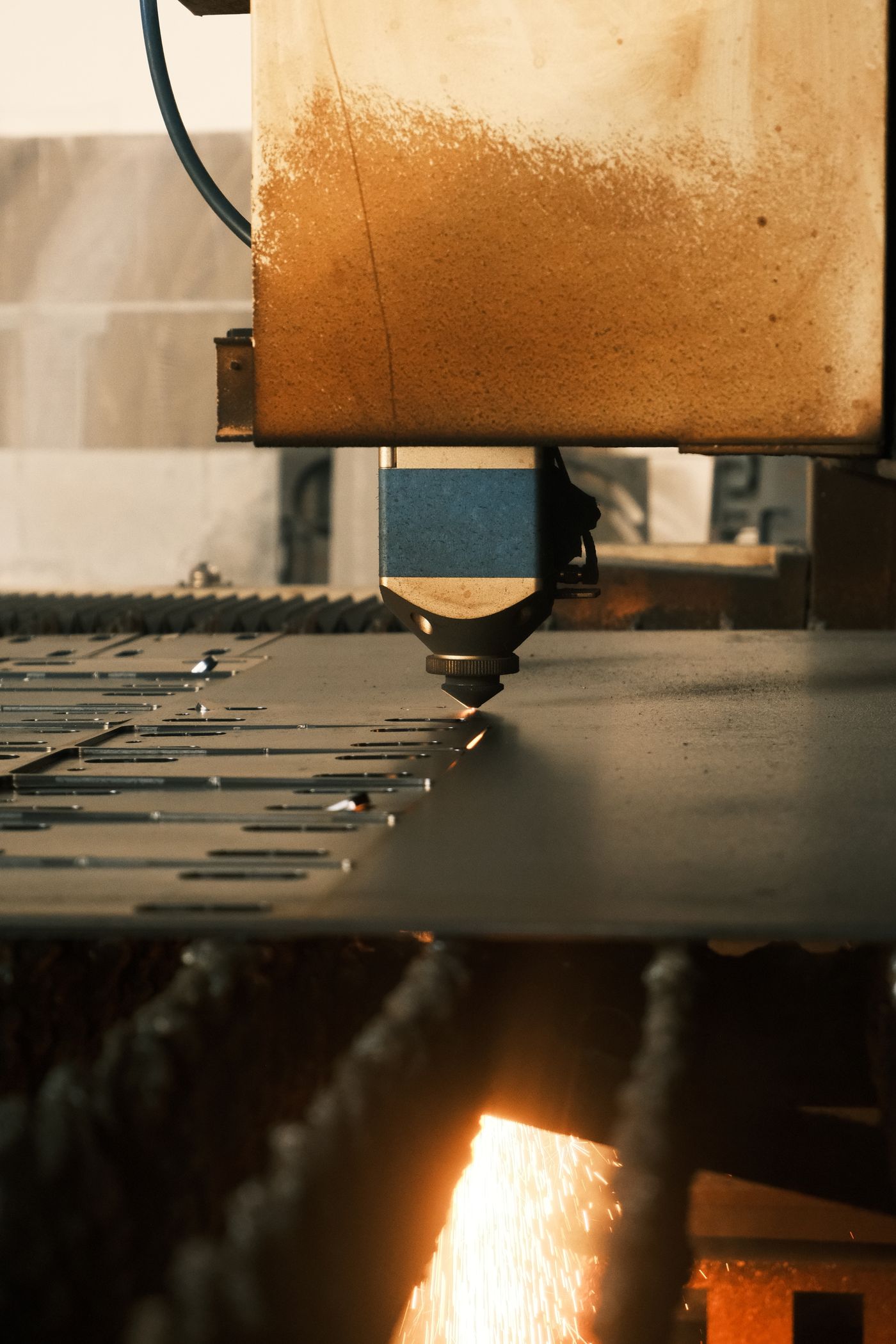
What is a laser cutting machine? In plain terms, it is a tool that uses a focused beam of light to slice through metal with speed and precision. Instead of a blade or punch, the machine aims concentrated energy at the material, melts or vaporizes a narrow line, and blows the waste away with assist gas. The result is a clean, accurate cut driven straight from a digital file. This guide explains what a laser cutting machine is, how it works, the main types, and how to pick the right one for your shop.
Table of Contents
- What Is a Laser Cutting Machine?
- How It Works
- Fiber vs CO2: The Two Main Types
- What Shops Use Them For
- How to Choose the Right Machine
- Frequently Asked Questions
Key Takeaways
- A laser cutting machine cuts metal with a focused beam of light, not a physical tool.
- Fiber and CO2 are the two main types; fiber dominates metal fabrication today.
- It runs from a digital file, so the same part repeats accurately every time.
- The right machine depends on your material, thickness, and volume.
What Is a Laser Cutting Machine?
A laser cutting machine is a computer-controlled system that focuses a high-energy beam onto metal to cut precise shapes. The beam heats a tiny spot until the material melts or vaporizes, while a stream of assist gas clears the cut. Because the whole process is guided by software, the machine follows any shape in the file, from simple brackets to fine detail, with the same accuracy on the first part and the thousandth. That combination of precision and repeatability is what sets it apart from saws, punches, and plasma.
How a Laser Cutting Machine Works
The machine generates a laser beam, then mirrors or a fiber cable carry it to a cutting head that focuses it to a fine point on the metal. A motion system moves the head along the programmed path while assist gas, usually oxygen, nitrogen, or compressed air, blows molten material out of the cut. Power, speed, focus, and gas pressure all get tuned to the material and thickness. Get those settings right and the edge comes off clean; get them wrong and you see dross, burr, or a cut that does not go all the way through.

Fiber vs CO2: The Two Main Types
There are two main kinds of machine. A fiber laser creates the beam in a solid fiber source and is the standard for cutting metal: it is efficient, fast on thin and mid-gauge sheet, and handles reflective metals like aluminum, brass, and copper. A CO2 laser uses a gas-filled tube and still earns its place on thick non-metals and certain organic materials. For most metal shops today, fiber is the clear pick. Our fiber vs CO2 comparison breaks down the trade-offs in detail.
What Shops Use a Laser Cutting Machine For
Fabrication shops use these machines to cut parts for everything from HVAC and automotive to signage, brackets, enclosures, and custom one-off work. The same machine handles prototype runs and full production because changing the job means loading a new file, not retooling. That flexibility is why a single laser often replaces several older machines and shortens the path from drawing to finished part.
How to Choose the Right Machine
Match the machine to your work. Look at the metals and thicknesses you cut most, the volume you run, the table size your parts need, and the source power that fits your range. Just as important is who stands behind it: installation, training, parts, and service decide how much uptime you actually get. Reger Laser sells and supports the Tanaka fiber laser lineup and helps match a machine to your shop. For the engineering background on the process, the TWI knowledge base is a good reference.
Frequently Asked Questions
What is a laser cutting machine used for?
A laser cutting machine is used to cut precise metal parts from a digital design, covering everything from prototypes to full production runs in shops across HVAC, automotive, signage, and general fabrication.
Is a fiber or CO2 laser better for metal?
For metal, a fiber laser is usually the better choice. It is more efficient, faster on thin and mid-gauge sheet, and handles reflective metals that give CO2 lasers trouble. CO2 still suits thick non-metals.
How much maintenance does a laser cutting machine need?
Less than older equipment, but it is not maintenance-free. Daily optics checks, a healthy chiller loop, and routine consumable swaps keep cut quality sharp. See our preventative maintenance guide for the routine.
Ready to find the right machine?
Reger Laser sells, installs, and services Tanaka fiber lasers and helps you match one to your material and volume. Get in touch to talk it through.


