

Laser machine spare parts fall into two groups, and treating them the same is what gets shops into trouble. There are fast-moving consumables you burn through every week, like protective windows and nozzles, and there are critical long-lead parts you rarely touch but cannot run without. Smart laser machine spare parts strategy stocks the first group deep, carries safety stock of the second, and sets every reorder point from your own usage rather than a vendor’s sales page. This guide shows you how to decide what belongs on your shelf and what does not.
Table of Contents
- The Two Kinds of Laser Machine Spare Parts
- Fast-Moving Consumables to Stock Deep
- Critical Long-Lead Spares to Carry
- Set Reorder Points From Your Own Data
- Genuine Versus Aftermarket Laser Machine Spare Parts
- Store Spares So They Last
- The True Cost of a Stockout
- A Starter Stocking List by Category
- Track Lead Times, Not Just Quantities
- Three Habits of Shops That Never Run Out
- Sourcing Without the Scramble
- Frequently Asked Questions
Key Takeaways
- Split laser machine spare parts into fast-moving consumables and critical long-lead spares.
- Stock consumables deep with min/max reorder points; carry safety stock of critical parts.
- The cheapest part can cause the most expensive downtime when it is out of stock.
- Set reorder points from your own 30 to 90 day consumption, not a generic stock list.
- Match optics to genuine spec; an off-spec window can damage the focus lens behind it.
The Two Kinds of Laser Machine Spare Parts
Every part on a fiber laser is one of two kinds, and the distinction drives how you stock it. Fast-moving consumables wear out predictably and get changed often. Critical spares rarely fail, but when they do the machine stops and the replacement is expensive or slow to arrive, or both. Sorting your laser machine spare parts into these two buckets is the first and most important move.
Get the two confused and you fail in one of two ways. You run out of a cheap consumable and stall the machine over a part that costs almost nothing, or you tie up cash in spares you did not need while the real fast-mover sits empty. Both are avoidable, and both come from stocking by gut feel instead of by category and data.
The goal of a laser machine spare parts plan is simple to state and harder to do: never let the machine sit idle waiting for a part you could reasonably have had on hand. Everything below serves that one goal.
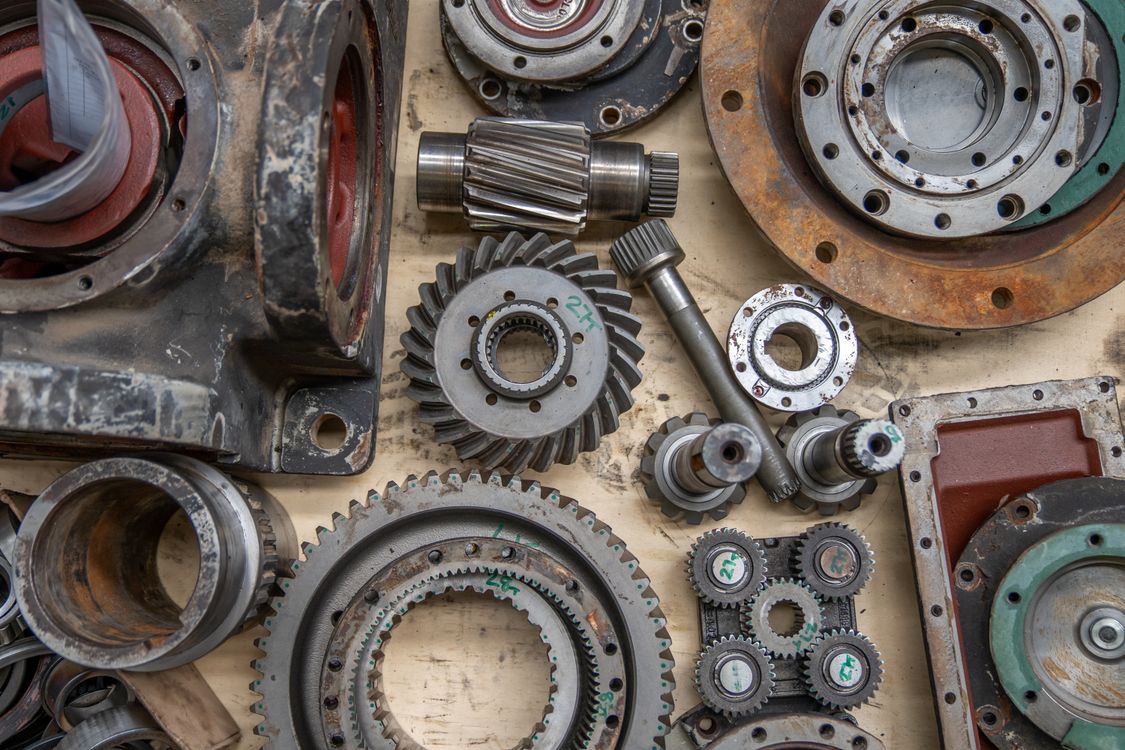
Fast-Moving Consumables to Stock Deep
Consumables are the parts a busy machine eats. These are the laser machine spare parts you never want to be without, because running out of any of them stops production over a part that costs a fraction of an hour of downtime.
- Protective windows and cover lenses, the sacrificial optic that shields the focus lens.
- Cutting nozzles in the sizes and types your work mix actually uses.
- Ceramic rings and nozzle holders, which crack and wear from heat and the odd collision.
- Focus lens, kept as a spare even though it is changed far less often than the window.
- Filters for air assist, extraction, and the cabinet.
- Chiller coolant or approved fluid and the resin or filters its loop uses.
Protective windows deserve a word on false economy. A bargain, off-spec window absorbs more energy, heats, and can fail and take the focus lens with it. The unit price is not the cost driver. The downtime and the damaged lens are. How fast you go through these is something your preventative maintenance log will tell you within a month, and that number is what sets how deep you stock.
Critical Long-Lead Spares to Carry
Critical spares are the laser machine spare parts you hope to never install, but a single day of lost production usually exceeds the cost of carrying one. The longer the lead time, the stronger the case for keeping it on the shelf rather than ordering it the day it fails.
- Cutting head internal optics and the head’s pigtail or fiber connector.
- Drive components: motors, belts, and bearings for the axes.
- Capacitive height-sensing components for the head.
- Key sensors, solenoids, and gas-control valves.
- A spare chiller pump or the parts its maker says fail first.
You will not stock all of these on day one. Start with the parts your machine’s maker and your own history flag as both failure-prone and slow to source. The point is to never let a long lead time, rather than the repair itself, be what keeps the machine down for a week. A part you cannot get for ten days is a ten-day outage even if the fix takes an hour. Trade resources like The Fabricator cover the maintenance and reliability side of laser cutting in depth if you want to go further on the subject.
Set Reorder Points From Your Own Data
Ignore any list that tells you to keep a fixed number of every part, because your machine, your materials, and your hours are not the same as anyone else’s. The right number of laser machine spare parts comes from your own consumption. Track how many protective windows and nozzles you change over 30 to 90 days, and that rate sets your min/max reorder points.
Set the minimum so a reorder lands before you hit zero, accounting for shipping time, and set the maximum so you are not hoarding cash on a shelf. Done right, this stops both stockouts and overstock at the same time. It is ordinary inventory discipline applied to the few dozen parts that actually keep a fiber laser cutting.
This is where the maintenance habit pays off twice. If your operators already record what they replace during daily machine care, you have the consumption data without any extra work. The log that protects your uptime also tells you exactly how to stock for it.
Genuine Versus Aftermarket Laser Machine Spare Parts
Aftermarket laser machine spare parts can be fine, and they can also be a quiet tax on your cut quality. Optics are the place to be careful. A cover window or focus lens with a sub-spec coating passes more heat into the glass, degrades faster, and can damage parts downstream. The savings on the part can be smaller than the cost of the problems it causes.
For consumables where coating and fit matter, match the genuine spec. For commodity items like some filters and hardware, a quality aftermarket source can be perfectly reasonable. The skill is knowing which is which, and that comes from knowing your specific machine.
When you are unsure, sourcing through a partner who knows your machine takes the guesswork out. Reger Laser handles parts sourcing for the machines we service, so you are not chasing the right window across five suppliers while the machine waits and the job slips.
Store Spares So They Last
Buying the right laser machine spare parts is only half the job. Stored badly, optics degrade before they are ever installed, and you pay for a part twice. Coatings on lenses and protective windows are sensitive to humidity and handling, so the shelf matters.
- Keep optics sealed in their packaging until the moment they go in the machine.
- Store spare lenses and windows in a dry box with desiccant, away from grinding dust.
- Handle optics by the edge, never the face, and never with bare fingers.
- Label and rotate stock so the oldest consumables get used first.
- Keep critical spares somewhere known and accessible, not buried in a drawer nobody can find at 2 a.m.
Good storage is cheap insurance. A focus lens that sat in a humid drawer for a year may be compromised before it ever sees the beam, which means your emergency spare fails you in the emergency. Treat stored optics with the same care you give installed ones.
The True Cost of a Stockout
Shops underspend on laser machine spare parts because the part price is visible and the downtime cost is not. Flip that. The real cost of a missing one-dollar window is the hour, or the day, the machine sits while you source it, plus the late job, plus the customer who remembers you missed the date.
Run the math once and the stocking decision gets easy. Add up the labor standing idle, the machine time lost, and the schedule damage from a single stockout, and compare it to the cost of carrying the part. For consumables and most critical spares, carrying the part wins by a wide margin. That comparison is also a real input to your fiber laser operating cost, since unplanned downtime is one of the most expensive line items a shop never budgets for.
A Starter Stocking List by Category
If you are building a laser machine spare parts shelf from scratch, start with categories and quantities you can refine later. The exact numbers come from your usage, but a sensible starting point keeps you covered while you gather a month or two of consumption data.
- Protective windows: several, since they are the single most-changed optic and the cheapest insurance you can buy.
- Nozzles: a working set in each size and type your jobs use, plus backups of the ones you change most.
- Ceramic rings and nozzle holders: a few, because collisions and heat take them out without warning.
- Focus lens: at least one genuine-spec spare, stored sealed and dry.
- Filters and chiller consumables: one full change of each on the shelf.
- One or two critical long-lead items your machine maker flags as both failure-prone and slow to ship.
This is a starting point, not a finish line. After 30 to 90 days, your real consumption will tell you which laser machine spare parts to stock deeper and which you barely touch, and you adjust the shelf to match. The categories stay the same; only the quantities move.
Track Lead Times, Not Just Quantities
Most shops size their laser machine spare parts by quantity and forget the other half of the equation, which is lead time. A part you use rarely but that takes three weeks to arrive can hurt you more than a fast-mover you can get next day. The reorder math has to account for how long a part takes to land, not just how many you go through.
Record the lead time next to each critical part the same way you record consumption. When you know a head optic takes ten business days and a window ships overnight, you can stock the slow part deep and the fast part lean, and your cash sits where it actually buys uptime. Two parts with the same failure rate deserve very different shelf strategies if one takes a day and the other takes a month.
Lead times also move, especially on imported or specialized components, so check them occasionally rather than trusting a number from two years ago. A laser machine spare parts plan that tracks lead time alongside quantity is the one that holds up when a supplier stretches out or a part goes on backorder right when you need it.
Three Habits of Shops That Never Run Out
The shops that never get caught short on laser machine spare parts are not lucky, they have three habits the rest skip. None of them is hard, and together they end the parts scramble almost entirely.
- They log consumption, so reorder points are based on real usage instead of memory.
- They reorder on a minimum, not on empty, so the next part lands before the last one is gone.
- They keep one reliable source lined up for long-lead parts before they ever need it.
Each habit removes a different way a shop runs out. The log kills guesswork, the minimum kills the last-minute scramble, and the standing source kills the long lead time. A shop that does all three almost never loses a day to a missing part, because the system catches the gap before the machine does. The habits cost a little attention and save a lot of downtime, which is the best trade in the building.
Sourcing Without the Scramble
The shops that never scramble for parts have done two boring things: they know their consumption, and they have a reliable source lined up before they need it. Pair a stocked shelf of fast-movers with a known supplier for the long-lead spares and the late-night parts emergency mostly disappears.
If you would rather not manage all of it in house, that is what a service partner is for. We keep our customers’ machines supplied with the right nozzles, windows, and critical spares, and we can help you build a stocking list from your real usage. Start with a conversation and we will work from your machine and your parts, not a generic catalog.
The bottom line on laser machine spare parts is that the planning is cheap and the downtime is not. A shelf of the right consumables, a short list of critical spares chosen by failure rate and lead time, and reorder points set from your own usage will keep your machine cutting through the small failures that otherwise stop a shop cold. It is a few hours of setup that pays back the first time a one-dollar part does not cost you a day.
Frequently Asked Questions
What laser machine spare parts should I always keep in stock?
Always keep the fast-moving consumables: protective windows, the nozzles your work uses, ceramic rings, a spare focus lens, filters, and chiller coolant. Running out of any of these stops the machine over a part that costs far less than an hour of downtime. Use your maintenance log to size the quantities.
How many spare nozzles and windows should I keep?
Set the number from your own consumption, not a generic list. Track how many you change over 30 to 90 days and use that rate to set a min/max reorder point so a new order arrives before you run out. Heavy oxygen cutting of thick steel burns windows faster, so let your usage lead.
Are aftermarket laser parts worth it?
For commodity items, a quality aftermarket source can be reasonable. For optics like protective windows and focus lenses, an off-spec coating absorbs more heat, fails sooner, and can damage other parts, so match the genuine spec there. The cheapest part is rarely the lowest total cost.
Can Reger Laser source parts for our machine?
Yes. Reger Laser handles parts sourcing for the fiber lasers we service, including consumables and critical spares. Get in touch and we will help you build a stocking list from your actual usage, sized to your machine and your work mix rather than a generic catalog quantity.
Stop Losing Days to a Missing Part
Reger Laser sources the right laser machine spare parts and helps you stock from real usage, so a cheap consumable never costs you a day. See our service and parts or contact us to build your list.


