

A laser chiller overheating almost always comes down to one of three things: the chiller cannot get rid of heat fast enough, it cannot move enough water to carry heat away, or it is being asked to remove more heat than it was built for. Dirty condenser coils, a hot shop, a clogged strainer, low water, a tired pump, a refrigerant problem, a bad sensor, and an undersized unit cover nearly every high-temperature alarm we get called about.
When the chiller trips, the laser stops, so this is not a nuisance alarm. It is lost production, and if it happens repeatedly it is also a slow way to shorten the life of the laser source. Here is how to work through the causes in the order that finds the problem fastest, plus the maintenance that keeps most of them from coming back. The steps apply to Orion chillers and to most other industrial recirculating chillers on fiber and CO2 machines.
Table of Contents
- Laser Chiller Overheating: Start Here
- How a Laser Chiller Removes Heat
- Cause 1: Dirty Condenser Coils and Filters
- Cause 2: A Hot Shop or Recirculated Exhaust
- Cause 3: Low Water Level or a Clogged Strainer
- Cause 4: A Weak Pump or Restricted Flow
- Cause 5: Refrigerant Problems
- Cause 6: Scale, Algae, or the Wrong Water
- Cause 7: A Sensor, Setpoint, or Control Fault
- Cause 8: The Chiller Is Undersized
- A Maintenance Schedule That Prevents Most of This
- Frequently Asked Questions
Laser Chiller Overheating: Start Here
Before opening anything, read the alarm. Most chillers distinguish between a high water temperature alarm, a low flow alarm, a high refrigerant pressure alarm, and a low water level alarm, and each points to a different part of the list below. Then check three things that take a minute each: is the air filter on the condenser visibly loaded with dust, is the water level in the tank where it should be, and what is the shop temperature near the chiller. Those three checks resolve the majority of overheating calls without a service visit.
If the alarm is intermittent and shows up in the afternoon on hot days, think airflow and ambient temperature. If it appears suddenly and stays, think flow, water level, or a component failure. If it started after a change in what the laser cuts or how long it runs, think capacity.
How a Laser Chiller Removes Heat
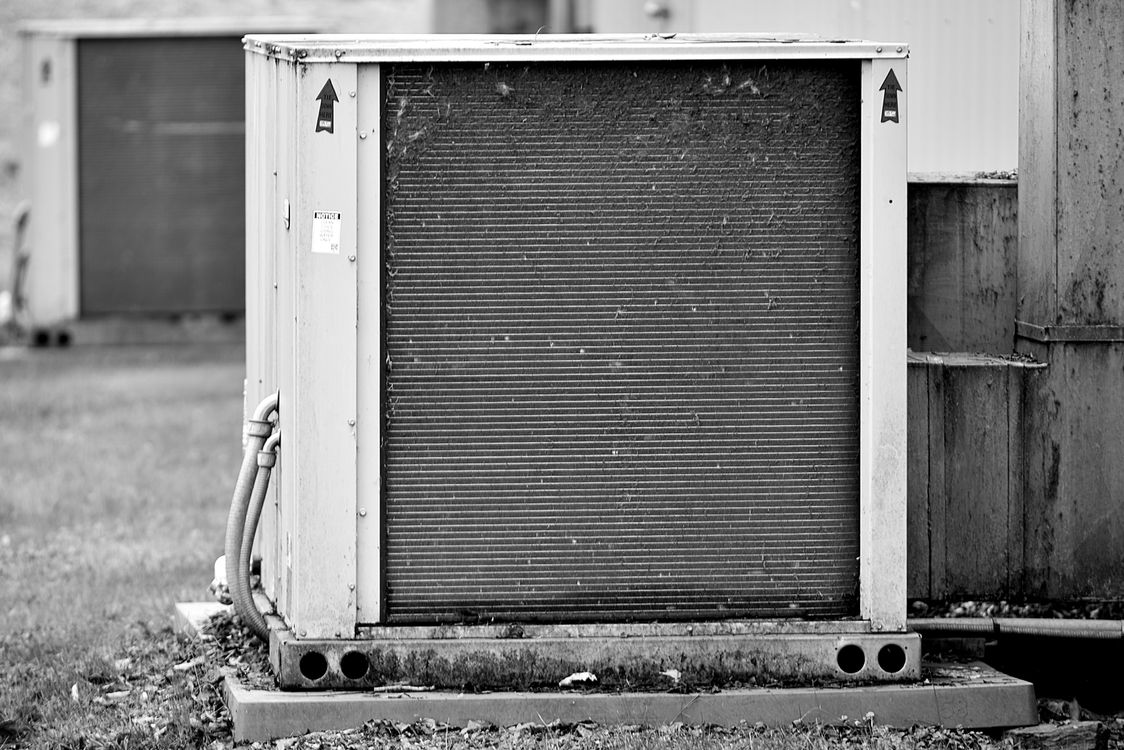
A recirculating chiller pumps water, or a water and glycol mix, through the laser source and cutting head, picks up the heat they reject, and carries it back to the chiller. There, an evaporator moves the heat from the water into refrigerant, a compressor raises the refrigerant’s pressure and temperature, and a condenser dumps that heat into the shop air through finned coils and fans. The cooled water goes back out to the laser.
Every link in that chain can be the weak one. If the fans cannot pull enough air across the condenser, heat backs up. If the pump cannot push enough water, the source overheats even with a healthy refrigeration circuit. If the compressor or refrigerant charge is off, the whole cycle runs warm. Understanding which link is failing is the point of the checks that follow. Our guide to laser chiller maintenance explains each component in more depth.
Cause 1: Dirty Condenser Coils and Filters
This is the most common cause, and the cheapest to fix. Cutting metal produces fine dust, and the condenser fans pull shop air through the coils all day. A filter mat that has gone gray or a coil packed with lint and metal dust cannot pass enough air, so the refrigerant cannot shed its heat, head pressure rises, and water temperature climbs with it. The Fabricator lists condenser fins and filter mats first among the commonly overlooked laser maintenance areas, and for good reason.
Fix: Replace or wash the external filter mats and blow out the condenser coils with low-pressure air from the clean side out, with the chiller powered down. Check the fans spin freely and that the covers are closed so air goes through the coils rather than around them. Put filter checks on a weekly schedule in a dusty shop.
Cause 2: A Hot Shop or Recirculated Exhaust
Air-cooled chillers are rated to hold their setpoint up to a stated maximum ambient temperature, and their capacity falls as the room gets hotter. A shop that sits at 95 degrees on an August afternoon in Mississippi, or anywhere in the South, can push a chiller that is fine in the morning into an alarm by 3 p.m. Worse is a chiller pushed against a wall or into a corner where its own hot exhaust gets pulled back into the intake. It is then trying to cool with air it just heated.
Fix: Give the chiller the clearance the manual specifies on every side, and make sure the exhaust has somewhere to go. Move it away from the laser’s dust collector exhaust, furnaces, and sunny bay doors. If the shop runs hot all summer, ventilate the chiller area or duct the exhaust out. Canadian Metalworking’s piece on prepping a laser for summer cutting covers the seasonal side well.
Cause 3: Low Water Level or a Clogged Strainer
Water evaporates from the reservoir over time, and small leaks at fittings lose more. When the level drops, the pump can cavitate or draw air, flow falls, and temperature rises. Separately, the Y strainer on the return line collects scale, sealant fragments, and biological growth, and a strainer that is half blocked chokes flow to the source even with a full tank.
Fix: Top the reservoir up with the water the manufacturer specifies, and find the reason it dropped if it happens more than occasionally. Pull and clean the strainer screen. If it clogs repeatedly, replace it at each water change rather than blowing it out and reinstalling.
Cause 4: A Weak Pump or Restricted Flow
A pump with worn impeller vanes or a failing motor moves less water at the same setting, and a low flow alarm is often the first sign. Kinked or crushed hoses between the chiller and the laser, a partially closed valve after service, or a fitting that was reduced in size when a hose was replaced all restrict flow the same way. The source still receives water, just not enough of it.
Fix: Compare the flow reading or pressure gauge to the value in the manual at the same setpoint. Trace the hoses for kinks and check every valve is fully open. If flow is low with clear lines and a clean strainer, the pump is the likely culprit and should be tested or replaced.
Cause 5: Refrigerant Problems
A low refrigerant charge from a slow leak, a failing compressor, or a stuck expansion valve reduces the refrigeration circuit’s ability to remove heat no matter how clean the coils are. The signs are a chiller that runs constantly without reaching setpoint, frost on the evaporator or suction line, and high or low pressure alarms that trip alongside the temperature alarm.
Fix: This is not an operator repair. Refrigerant work requires a certified technician with the right equipment. Rule out airflow, water level, and flow first, because those mimic refrigerant symptoms, then call for service. Do not keep resetting a refrigerant alarm and running; a compressor run low on charge is an expensive failure.
Cause 6: Scale, Algae, or the Wrong Water
Tap water carries minerals that deposit as scale inside the source’s cooling passages and the chiller’s heat exchanger. Warm water in a reservoir grows algae and bacteria. Both coat the surfaces that are supposed to transfer heat, so the water leaves the chiller cold and arrives at the source unable to pick up heat efficiently. Over time, scale narrows passages enough to restrict flow as well.
Fix: Use the water the chiller and laser manufacturers specify, typically distilled or deionized water with an approved corrosion inhibitor, and never plain tap water. Change the water on the recommended interval, usually every few months, and clean the reservoir when you do. If the system already has scale, a manufacturer-approved flush is the answer; harsh cleaners can damage seals and the source’s internal passages.
Cause 7: A Sensor, Setpoint, or Control Fault
Sometimes the chiller is fine and the reading is wrong. A drifting temperature probe, a loose sensor connection, or a setpoint that someone changed while trying to fix a different problem can all produce alarms that do not match what the water is actually doing. Dual-circuit chillers that cool the source and the optics at different temperatures add another possibility: the circuits or their setpoints get swapped.
Fix: Compare the displayed temperature to a calibrated thermometer in the reservoir. Confirm the setpoints against the laser manufacturer’s specification for each circuit. If the sensor reads wrong, replace it; if a setpoint was changed, restore it and find out why it was moved.
Cause 8: The Chiller Is Undersized
A chiller that was matched to a 3 kW laser will not keep up with a 6 kW source, and a chiller that was adequate for a single shift may fall behind when the machine runs two. The heat a fiber laser rejects scales with its rated power and its efficiency, and the cutting head, optics, and any automation add load on top. If the alarm appears only during long, heavy cuts and clears during lighter work, capacity is the likely issue.
Fix: Compare the chiller’s rated cooling capacity at your actual shop temperature to the heat load of the laser and everything else on the loop. If the margin is thin or negative, the fix is a larger chiller, not more maintenance. We walk through the math in our guide to sizing a chiller for a fiber laser, and Orion industrial water chillers are available in capacities matched to the full range of Tanaka machines.
A Maintenance Schedule That Prevents Most of This
- Weekly: Check the water level and the condenser filter. Look for leaks at fittings. Note the running temperature and flow so you notice a drift before it becomes an alarm.
- Monthly: Clean or replace filter mats. Blow out the condenser coils. Inspect hoses for wear and kinks. Verify fans run and clearances are still clear of stock and pallets.
- Every water change, typically quarterly: Drain and refill with the specified water and inhibitor. Clean the reservoir. Replace the strainer screen. Check setpoints against the laser manual.
- Annually: Have a technician check the refrigerant charge, pressures, compressor amperage, and pump performance. Calibrate the temperature sensors.
That schedule fits alongside the routine in our fiber laser preventative maintenance guide, and the chiller items take less than an hour a month in most shops.
Frequently Asked Questions
Can I keep cutting if the chiller is running warm but has not alarmed?
You can, but you should find out why before the next shift. A chiller running above setpoint is a chiller losing margin, and a fiber source that runs warm for long periods ages faster. Treat a warm-running chiller as a maintenance item due today rather than a problem for later.
What temperature should a fiber laser chiller run at?
The laser manufacturer specifies it, and it differs between the source circuit and the optics circuit on machines that have both. Setting the water colder than specified is not a fix for overheating and can cause condensation on optics. Use the specified setpoint and solve the heat removal problem instead.
Why does my chiller only overheat in summer?
Ambient temperature. Air-cooled chillers lose capacity as the shop warms, and a unit with just enough margin in April runs out of it in August. Clean coils, better clearance, ventilation, or a larger chiller are the fixes, roughly in order of cost.
Does a CO2 laser chiller overheat for the same reasons?
Yes, and CO2 machines put a larger heat load on the chiller for the same rated power, so they are less forgiving of dirty coils and hot shops. The checklist above applies to both.
Who can service an Orion chiller?
Reger Laser sells and supports Orion chillers alongside Tanaka laser cutting machines, and our service team handles chiller diagnosis as part of machine support. Contact us with the alarm code and the chiller model and we will help you work through it.
Keep the Laser Cool and Cutting
Most laser chiller overheating is preventable with clean coils, the right water, and a chiller sized for the machine it serves. Reger Laser sells, installs, services, and trains on Tanaka fiber lasers and Orion chillers for fabrication shops nationwide. See what our service covers or get in touch if your chiller is tripping and you want a second set of eyes on it.

